
Proximal sensing is a measurement method where sensors are placed close to the target object or surface. It is used to collect detailed data about plants, soil, materials or environmental conditions.

Proximal sensing enables precise, close range measurement of plants, soil, surfaces and environmental conditions. Instead of observing a target from far away, proximal sensing uses sensors placed near the object or directly above the measured surface. This creates highly detailed data for research, agriculture, environmental monitoring and industrial analysis.
Proximal sensing is used when accurate measurement at short distance is required. Sensors can record optical, spectral, physical or chemical information from a specific target area. In agriculture and environmental research, this is especially valuable, because conditions often change within very small spatial scales.
A single field can contain different soil textures, moisture levels, nutrient conditions and plant health patterns. Traditional sampling can detect these differences, however it is often time consuming and limited to selected points. Proximal sensing provides a faster and more detailed way to understand this variability.
By using optical and hyperspectral technologies, proximal sensing systems detect how materials reflect, absorb or emit radiation. These spectral signatures make it possible to draw conclusions about vegetation status, soil properties, plant stress, water content or environmental change. As a result, researchers receive data that supports better analysis and more precise decisions.
Modern precision agriculture depends on reliable data. Proximal sensing helps farmers, researchers and land managers understand what is happening directly in the field. Instead of treating a complete field as one uniform area, proximal sensing makes local differences visible.
This is important for site specific management. Fertilizer, water and crop protection products can be adapted more precisely to real conditions. On the one hand, this helps reduce unnecessary input. On the other hand, it supports yield potential, soil protection and sustainable resource management.
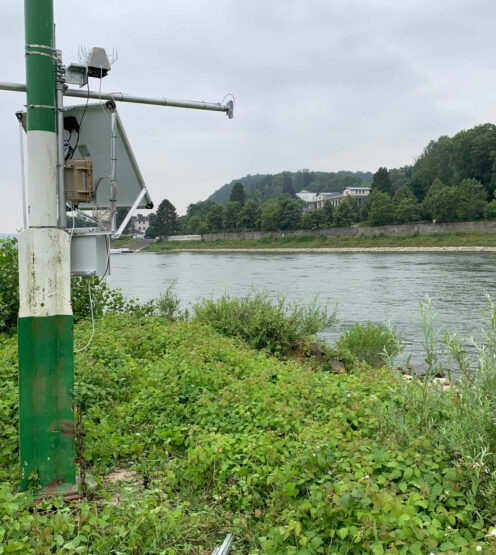
Proximal sensing can be used for several agricultural and environmental parameters. These include soil moisture, organic matter, texture, nutrient levels, plant vitality, biomass development and stress indicators. Depending on the application, the sensor can be handheld, mounted on a mobile platform, integrated into a field system or combined with other measurement technologies.
The strength of proximal sensing lies in its spatial detail. It can provide high resolution information that laboratory analysis alone cannot deliver efficiently across larger areas. Therefore, proximal sensing is a powerful method for research teams that need accurate field data without relying only on manual sampling.
Optical proximal sensing uses light to investigate the properties of a target. Hyperspectral sensing goes one step further. It captures information across many narrow wavelength bands and therefore creates a detailed spectral profile of the measured object.
This makes hyperspectral proximal sensing especially useful for environmental monitoring, plant research and soil related applications. Materials can look similar to the human eye, but their spectral response can reveal important differences. A plant under stress, for example, may show spectral changes before visible symptoms appear. Soil surfaces can also provide signals related to moisture, composition or organic matter.
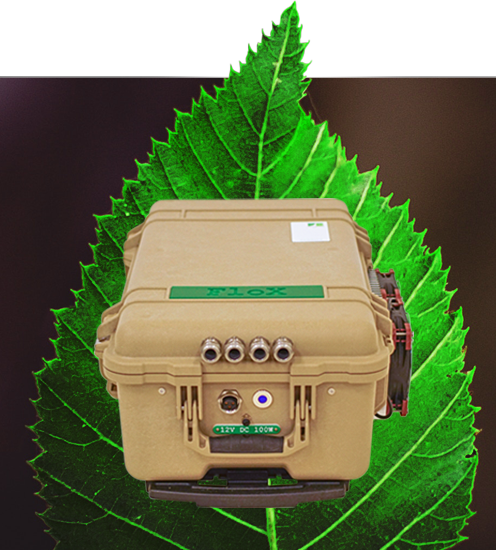
JB Hyperspectral develops advanced sensing solutions for demanding research environments. Systems such as the FloX Fluorescence Box help measure plant related signals and create a deeper understanding of vegetation processes. By connecting optical measurement, spectral data and environmental context, proximal sensing becomes a strong tool for modern monitoring strategies.
A proximal sensing system is not only a single measuring device. In many applications, it becomes part of a complete monitoring workflow. Sensors collect data close to the target. The measured values are then digitized, processed and connected with further analysis tools.
This enables continuous observation, comparison over time and combination with other data sources. For example, proximal sensing data can be integrated with drone data, soil sampling, weather information or crop monitoring systems. This creates a broader and more reliable picture of environmental conditions.
In research, this approach supports detailed experiments and long term monitoring. In agriculture, it supports data driven decisions. In industrial and environmental applications, it helps detect changes early and document them precisely.
Reflectance Box
Measuring reflectance effortless, the RoX is the all in one solution for your spectral survey.
FIND OUT MOREFLUORESCENCE BOX
Measuring chlorophyll fluorescence easy and reliably, the FloX is the key to a new understanding of plants.
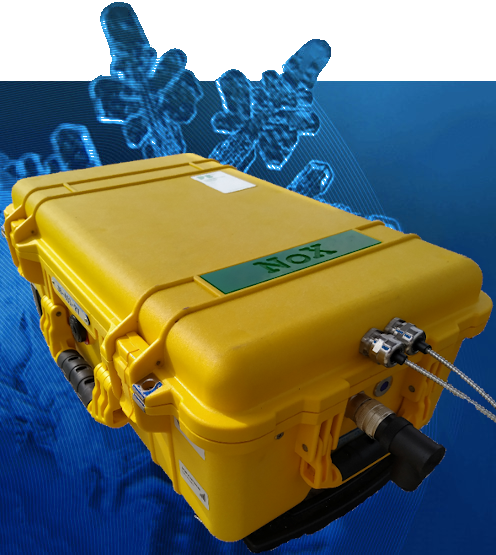
FIND OUT MORENIR reflectance BoX
Measuring Visible and Near Infrared radiance and reflectance, extending the RoX capabilities towards the NIR
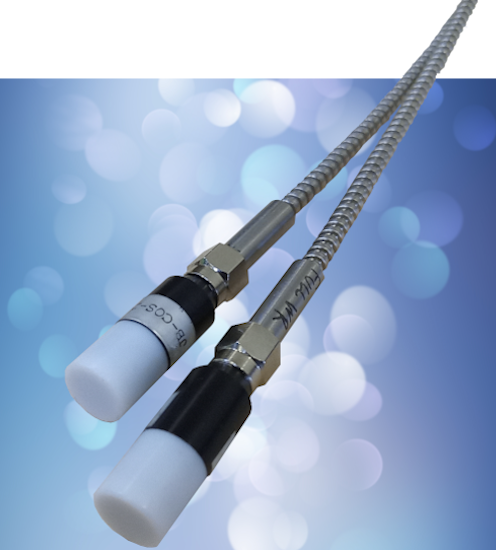
FIND OUT MOREJB COS
Measuring solar irradiance from equator to poles. The cosine receptors for field spectroscopy applications.
FIND OUT MORE
JB Hyperspectral Devices GmbH
Am Botanischen Garten 33
40225, Düsseldorf – Germany