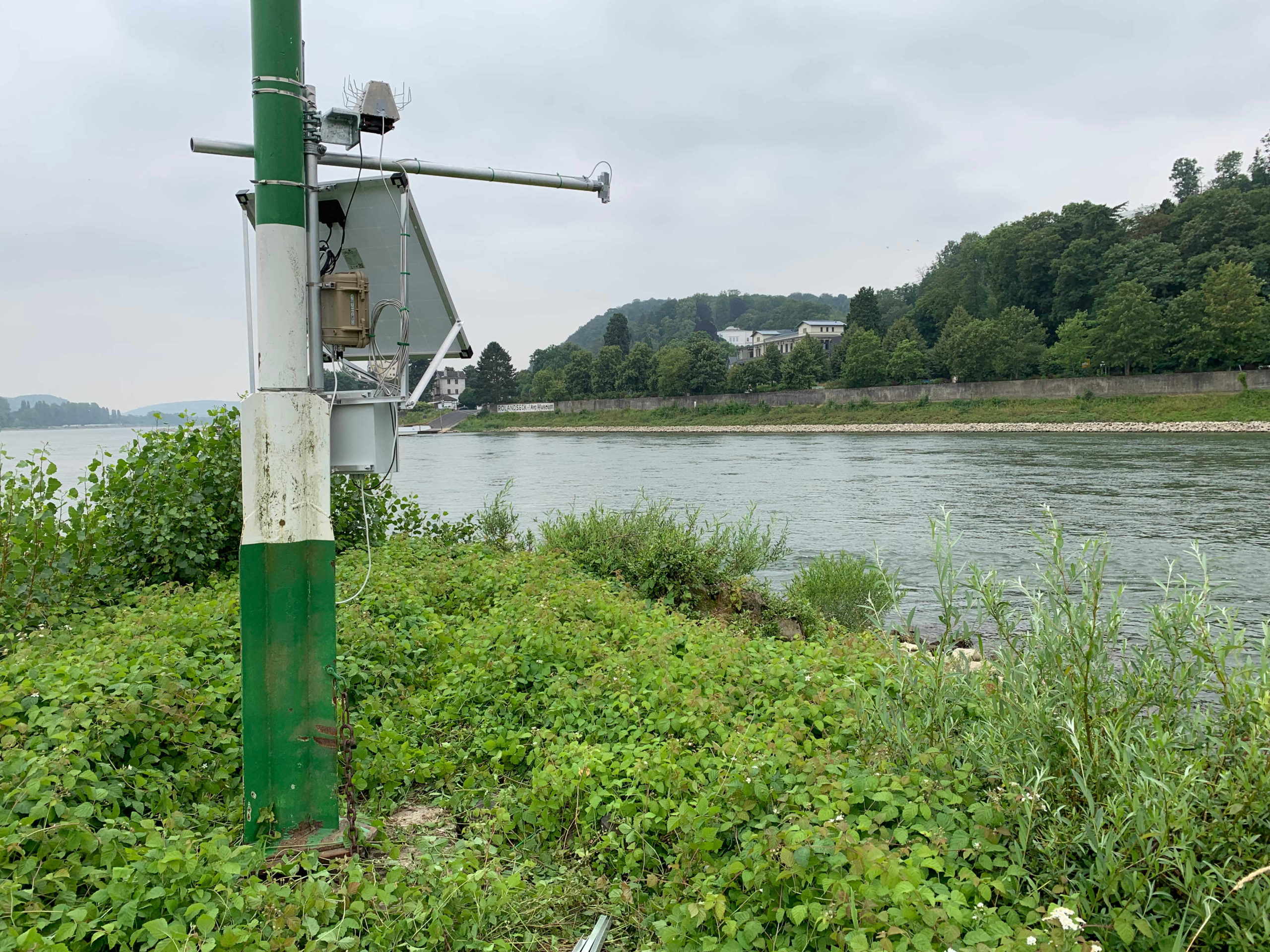
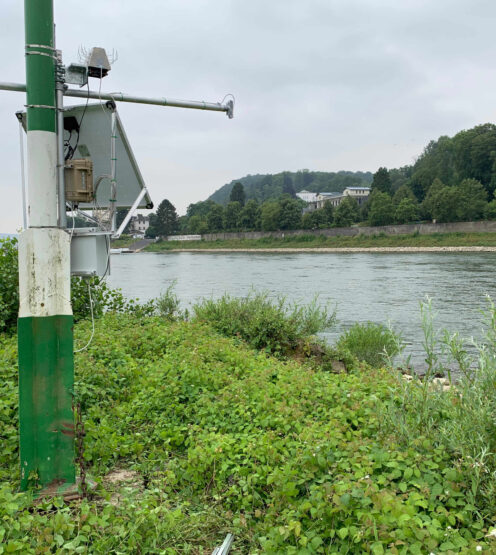
RoX installed on the Rhine river

water spectroscopy

Systems for outside spectral data

Water spectroscopy enables detailed spectral analysis of water and water-influenced surfaces by quantifying how light interacts with water molecules and dissolved substances. Unlike simple point measurements, water spectroscopy captures complex variations in reflectance and absorption across a broad range of wavelengths. This makes it an indispensable tool for environmental monitoring, aquatic research, water quality studies, and the characterization of aqueous ecosystems.

DESCRIPTION

What matters outdoors

Water spectroscopy becomes truly valuable outdoors when spectral detail, radiometric stability, and operational reliability come together. Under real conditions, water surfaces change constantly. Illumination shifts, surface structure varies, and subtle absorption features compete with reflections. Systems designed for outdoor water spectroscopy turn exactly these challenges into an advantage by delivering stable, comparable spectra where it actually matters.

Equally important is the ability to operate continuously. Outdoor water spectroscopy benefits from systems that are built to run unattended, withstand exposure, and keep collecting data when conditions change. This transforms water spectroscopy from short campaigns into a powerful tool for long-term monitoring and applied research.

All these aspects are at the heart of JB Hyperspectral’s RoX model, which is designed for permanent outdoor installation and offers features such as rugged, waterproof housings, a 12V battery or solar power supply, and autonomous operation with long-term SD logging.
ROX

Reflectance Box

Measuring reflectance effortless, the RoX is the all in one solution for your spectral survey.

FIND OUT MORE

Specifications

RoX (Reflectance Box)

Application

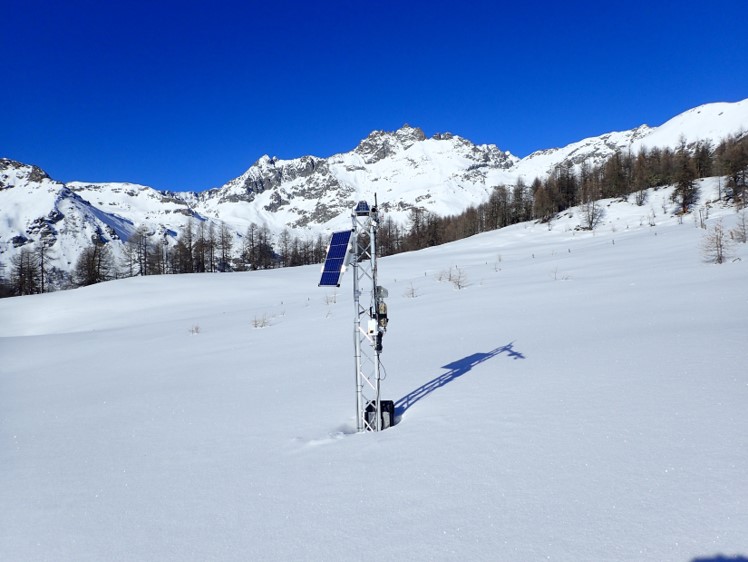
Long term reflectance time series for environmental monitoring, including vegetation, water quality, and snow and ice studies.

Advantages

Fully autonomous weatherproof operation with low power consumption, dual channel irradiance and radiance workflow, stability checks and metadata for consistent time series.

Spectral range

VIS-NIR ~400–950 nm (other options available on demand).

Spectral performance

SSI ~0.65 nm and FWHM ~1.5 nm (SNR ~250).

Fast & autonomous in the field

Fully autonomous acquisition, quick measurements, large SD storage.

FAQ

What is water spectroscopy used for?

Water spectroscopy is used to analyze how light interacts with water and dissolved substances. This allows the detection of properties such as absorption, reflection, and spectral changes. On the one hand, this supports environmental analyses; on the other hand, it enables comparable measurements over extended periods.

Which spectral ranges are relevant in water spectroscopy?

Water spectroscopy typically focuses on the visible and near-infrared ranges, as water and its components exhibit characteristic absorption features in these ranges. This allows for the precise detection of changes in composition or state.

Why is water spectroscopy suitable for field applications?

Water spectroscopy works well in the field by capturing real-world light and environmental conditions. However, the measurement quality is highly dependent on stable references. Therefore, the method is particularly suitable for continuous and comparable datasets.

Can JB provide assistance for instrument installation?

Yes. Just get in touch with us to request our installation service.

microscopy background image

Contact us for more info about our products

Contact us